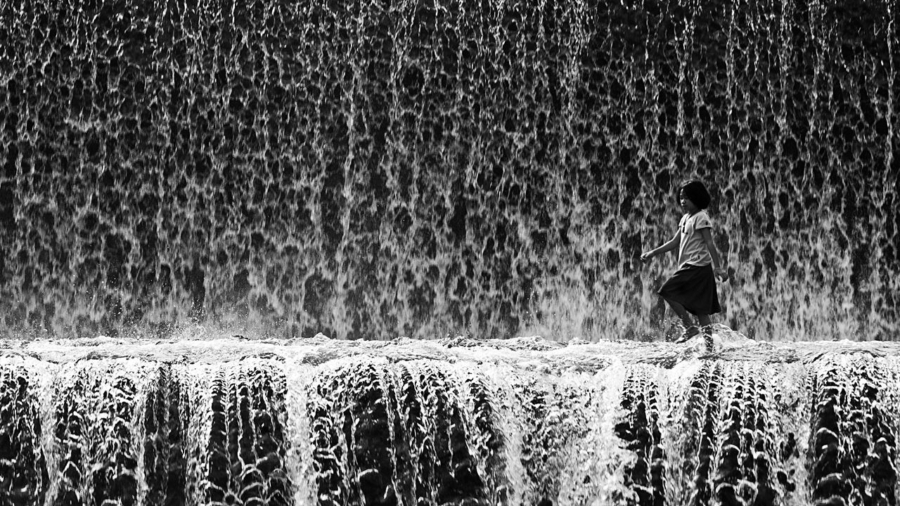
Color is a visual experience depending on lights: if there’s no light, then no color. Certain literatures say that black is not a color, but something’s wrong with that statement. Actually, black is a color… a color without hue. So are white and gray; they just have different luminosity: thus these are achromatic colors. In the realm of photography, it means recording dimension of colored lights into white, grays or black. The ability of someone to visualize a photographic work influences the positioning of those achromatic colors.
It was very hard for me to understand grayscale photos, in my first years of learning photography. For me they gave no chilling sensations.
And few years passed away, carrying experiences for me, I finally got into boredom of chromas, and trying to find another sensations. Then finally, I explored grayscale photography: editing images into grayscale and comparing them to the colored ones. In my exploration on grayscale, I found a different sensation in it-like mentioned before-the sensation of transition from chromatic to achromatic. I found that hue determines the image’s gradients, for example: reds made into grayscale will differ to blues made into grayscale. Many times, photographers don’t realize such things: only know grayscale visually, but don’t get into the basics of its process and its history. And in a transition, we must consider levels of light in grayscale images.
There’s more things I get from the experiences of grayscale photos, like achromatic notation, types of achromatic and more and more and more and—yup, it will be too long if I talked too much about it.
So, final conclusion: enjoy the world… in grayscale! And may this will please you.
With warm greetings,
Rio Dwisandy.